The honest answer is a range, because "a website" can mean a template with your logo or a site designed around how your company sells. This article explains where the money goes, what drives the price up and what we charge ourselves, so you can judge any quote you get.
The three parts of the bill
Every website has three cost blocks. Most quotes only show the first.
- The build. Strategy, design, development and launch. A one-off cost.
- The platform. Hosting, licences and add-ons. A recurring cost, paid to the platform or your host.
- Keeping it good. New pages, content, search performance and fixes after launch. Done by your own team, by a partner, or both.
Three levels of website
A template site. A bought theme filled with your content, by yourself or a freelancer. This can be live for a few thousand euros. It works for a start-up testing a market. The design then follows the template, not your sales story.
A custom-built site. Designed for your audience and offer, built from a design system your team can extend. This is what most B2B companies need once buyers compare three suppliers before they call one.
A site with a system behind it. Several languages, brands or integrations with a CRM or ATS. The build is bigger, but so is what the site does for sales and recruitment.
What we charge
We design in Figma and build in Webflow. All amounts exclude VAT.
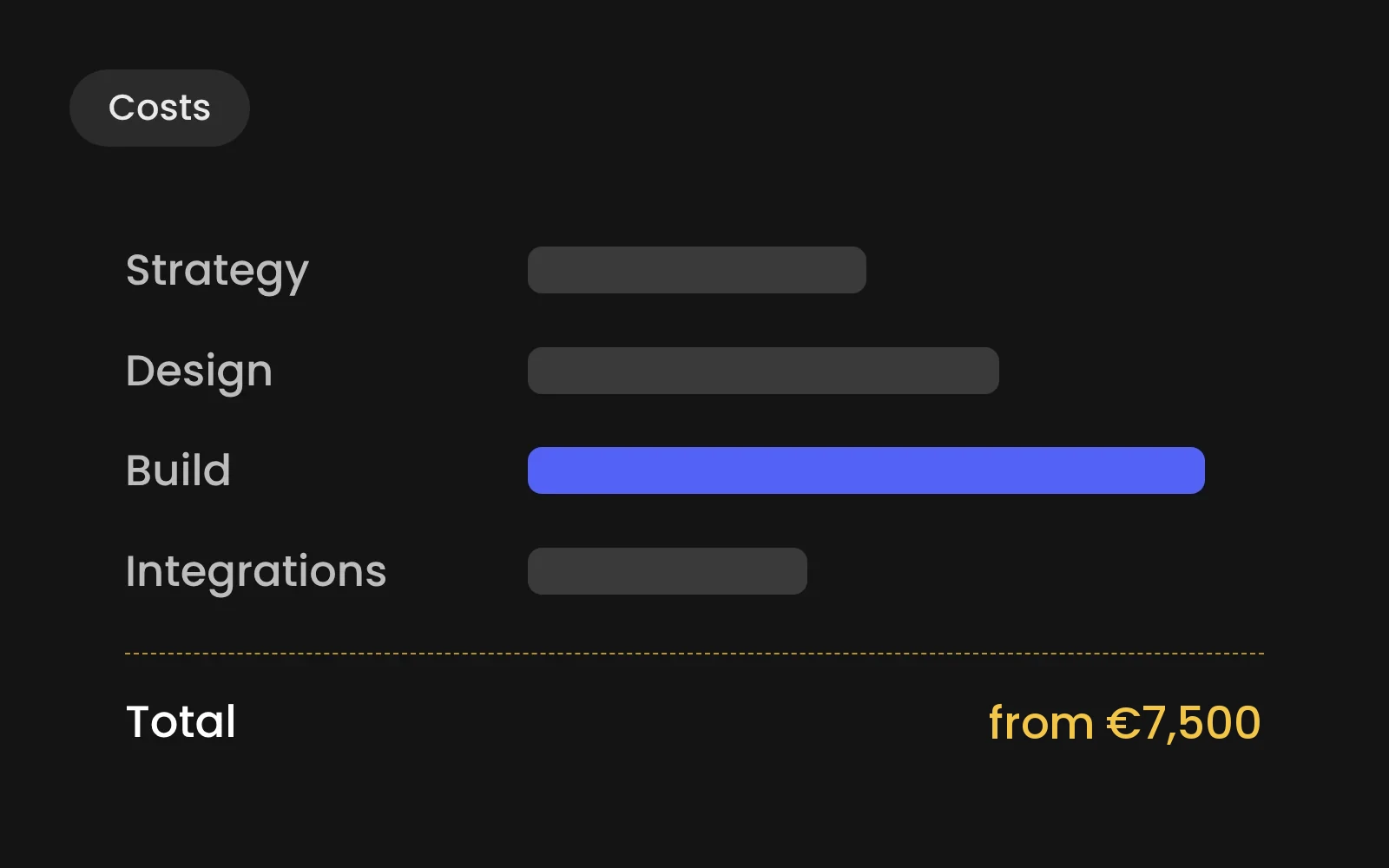
- From 7,500 euros for a compact B2B site: a kick-off on goals and structure, the key pages designed in Figma with a small design system, the build in Webflow, a CMS for at least one content type, technical SEO and a handover session.
- 15,000 to 25,000 euros on average for a more extensive site, with more page templates, several CMS collections and a CRM link.
- Integrations such as website forms to your CRM through n8n take about four days of work and start from 2,500 euros.
- Custom motion such as scroll animations starts from 2,000 euros.
Extra templates, CMS collections and languages have no fixed price. They depend on how much each one asks of design, content and SEO, so we price them in the proposal.
What drives the price up
- Unique page templates. Each one is designed, built and tested. Pages that reuse a template cost little.
- Content that repeats. Cases, vacancies, news or locations each need their own structure in the CMS.
- Integrations. Forms that should land in a CRM, vacancies that sync from an ATS, data that moves between tools.
- Languages. Every language needs translation, a native review and its own keyword research. See Multilingual sites with Webflow Localization.
- Moving from an old site. We always combine a move with a redesign, so it is priced as a new site. See WordPress to Webflow without losing SEO.
- Copy, photography and video. Often the largest variable of all.
What the platform costs
Webflow charges per site, in dollars, excluding VAT. Billed yearly, the Basic plan is 15 dollars a month and fits a simple site without CMS. Premium is 25 dollars a month and fits most B2B sites, with a CMS for up to 20,000 items. Localize adds languages from 9 dollars a month per language. People who design or build in Webflow need a workspace seat; editors who only change text and images do not.
A WordPress site has comparable costs, spread differently: hosting, premium plugins and the hours spent on updates and security.
The costs people forget
- Content. A new site with old copy is an old site. Budget time or money for writing.
- Your own time. Feedback rounds, approvals and content delivery take hours on your side.
- Photography and video. Stock photos rarely work for B2B. A shoot day often pays for itself in trust.
- Growth after launch. Traffic does not arrive by itself. SEO, content and campaigns need a budget too.
How to compare quotes
Quotes differ because they cover different things. Put them side by side on five points: the number of unique templates, what goes into the CMS, which integrations are included, whether copy and SEO are part of it, and who actually does the work.
You get a firmer number faster if you bring these to the first call:
- A list of the pages you think you need
- Two or three sites you like, and why
- The systems the site should connect to
- The languages you need, now and within a year
- Your deadline and who on your side makes the decisions
Read next
- How a new website gets made, from brief to launch
- Website maintenance: what it involves and who does it
- Webflow for B2B websites: costs, limits and how a project runs