Rotating headline
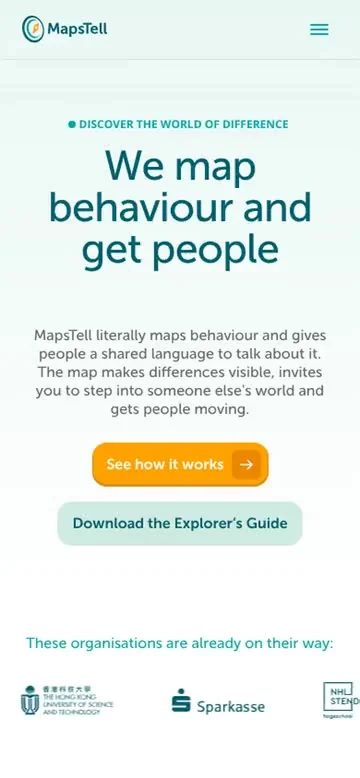
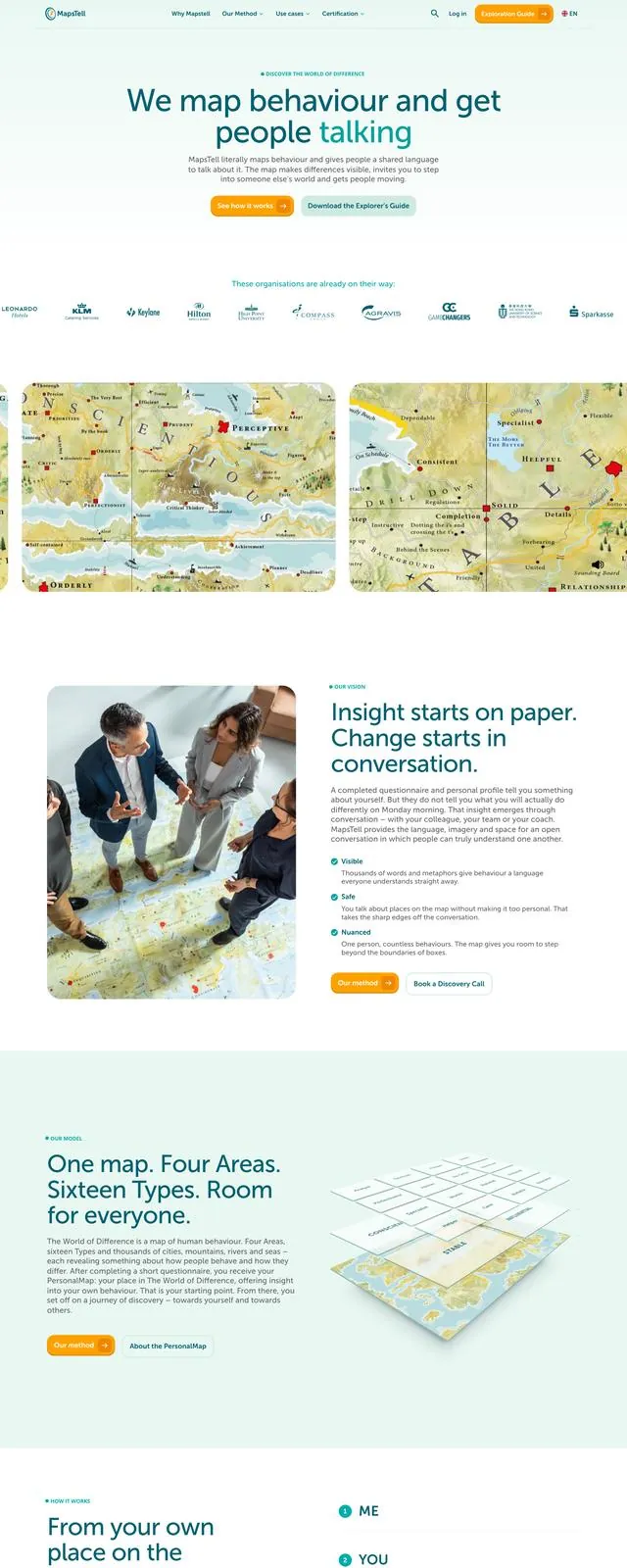
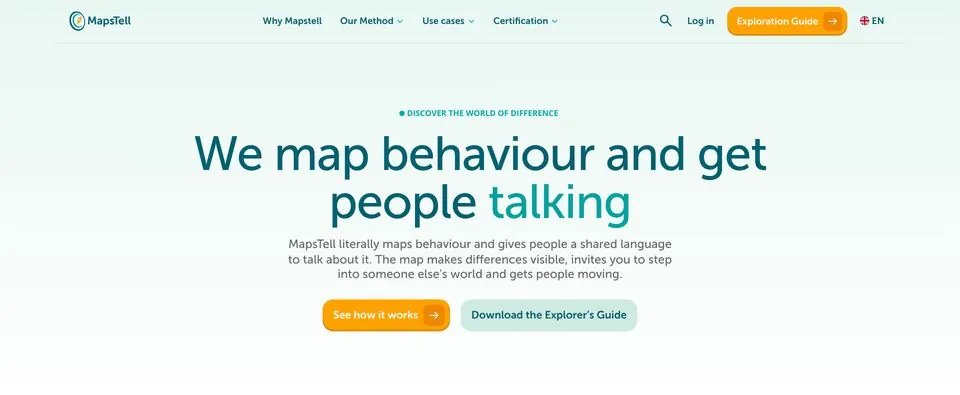
We map behaviour and get people talking, closer, curious, amazed, connected. One sentence, five promises.




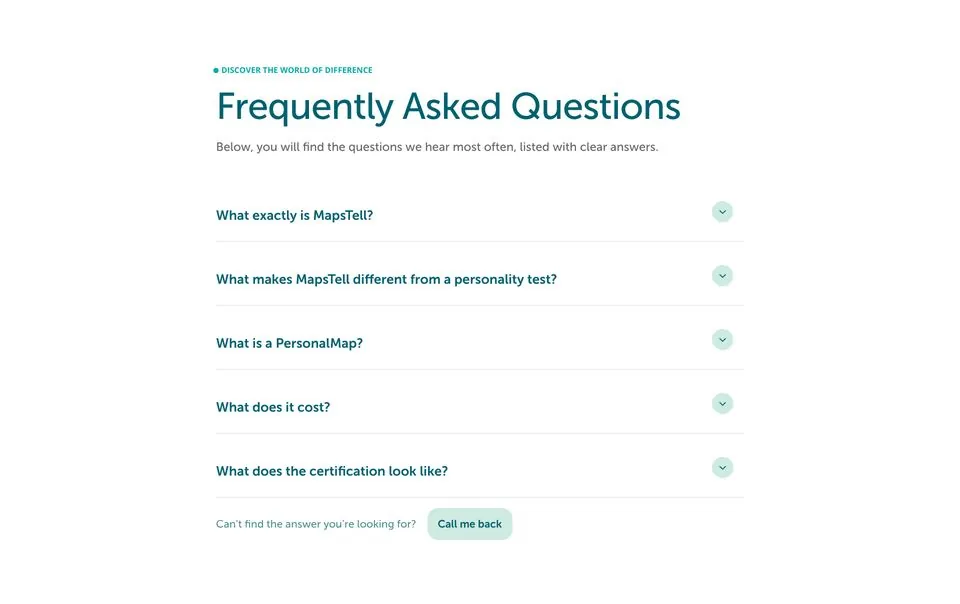
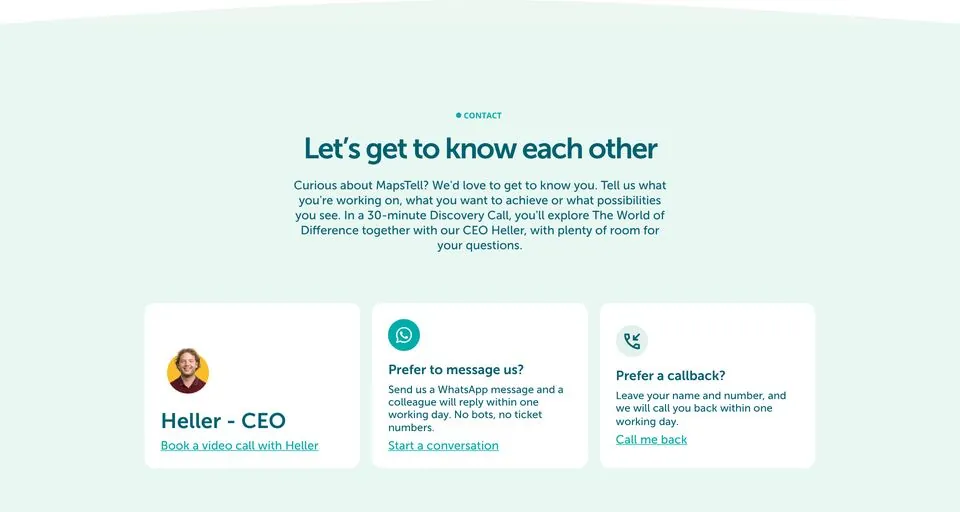
 HeroLogo wallImage sliderFeature sectionStepperCard gridCarousel cardsComparisonCentered contentFAQContact
A simplified view of how a page is put together in Webflow. Click around: add a component to the page slot, select it, remove it.
Every one of them assembled from the same set of components.
Counted in the source of the live pages. Each one can be dropped into any page slot.
Designed in Figma, built in Webflow and used by MapsTell's own team.
MapsTell's previous website ran on a custom-built CMS. It did the job, but the team could not build new pages on their own, while they kept adding applications, client stories and countries.
A redesign alone would not fix that. The team needed to build pages themselves, without breaking the brand or the links that other tools already pointed to.
We designed the site in Figma as a system of components instead of a set of pages, and built that system in Webflow. Heroes, sliders, feature sections, steppers, card carousels and FAQ blocks are separate components, each with its own content fields.
Every page has a page slot. MapsTell's marketeer drops components into it, puts them in order and fills in the fields. Forms are built the same way, from ready-made field components, and every submission is checked for spam, tagged with its source and sent through an n8n flow into their CRM.
The new mapstell.com is live. A new page no longer starts with a briefing to an agency. It starts in Webflow, with the people who know the method best.
For us it is the clearest example of how we like to build: hand over a system the client can run, and stay close for the parts that need a developer.
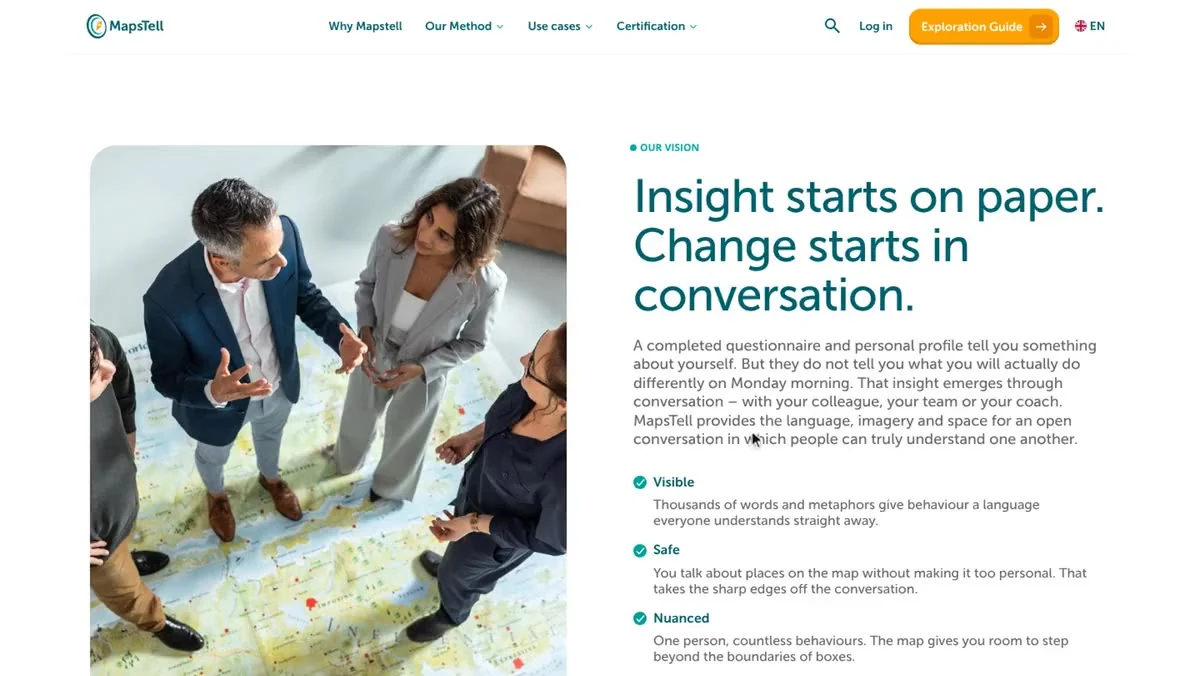
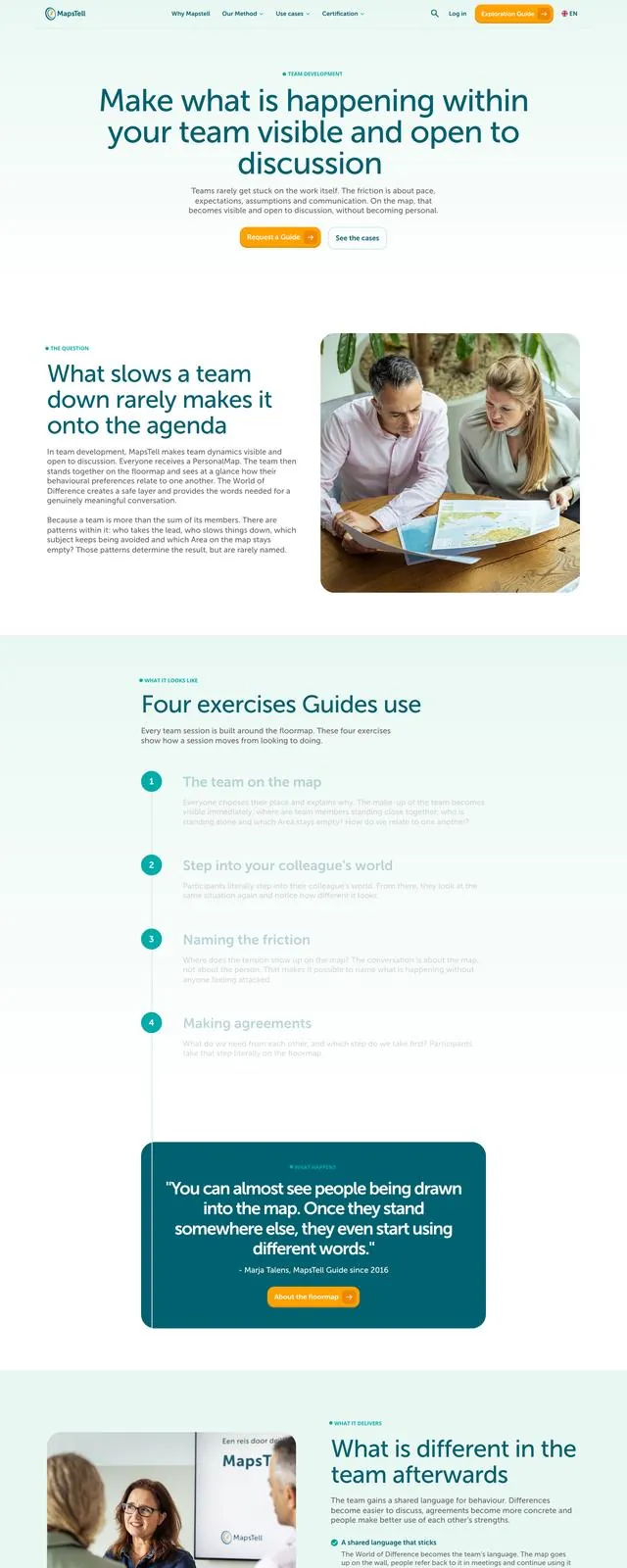
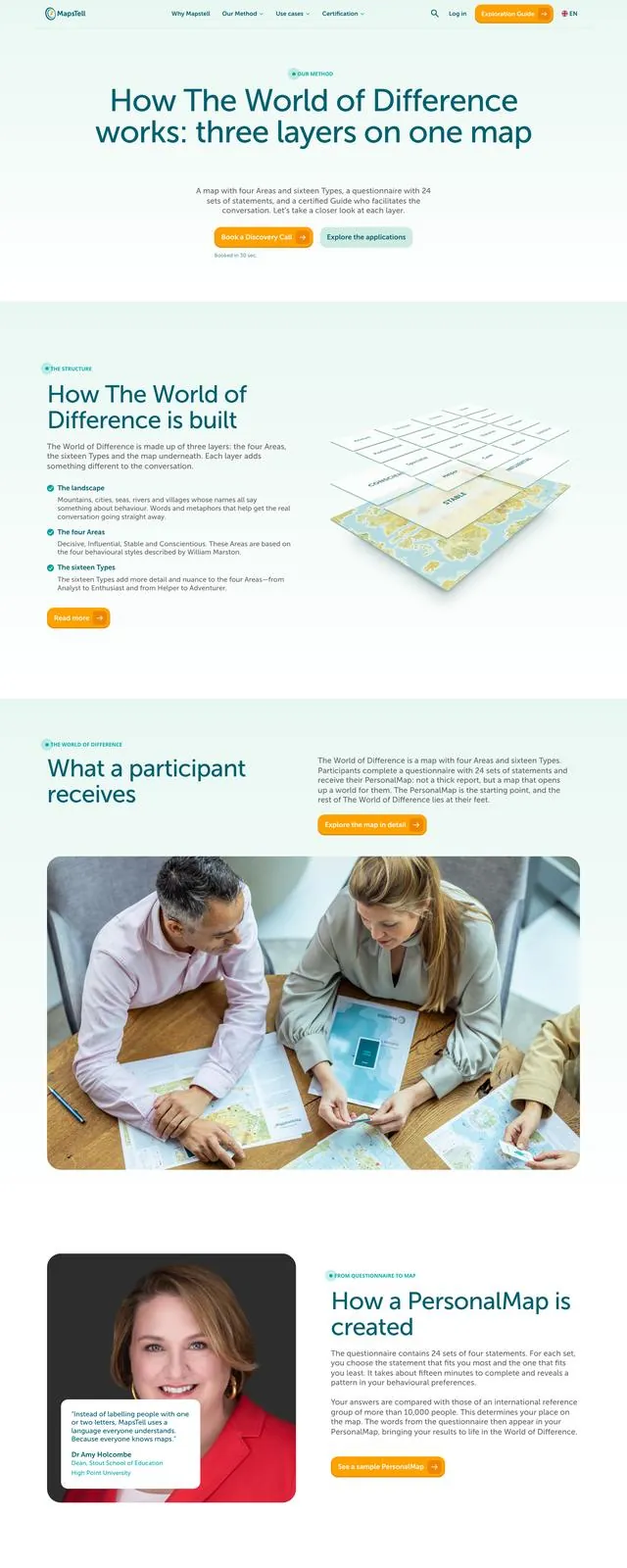
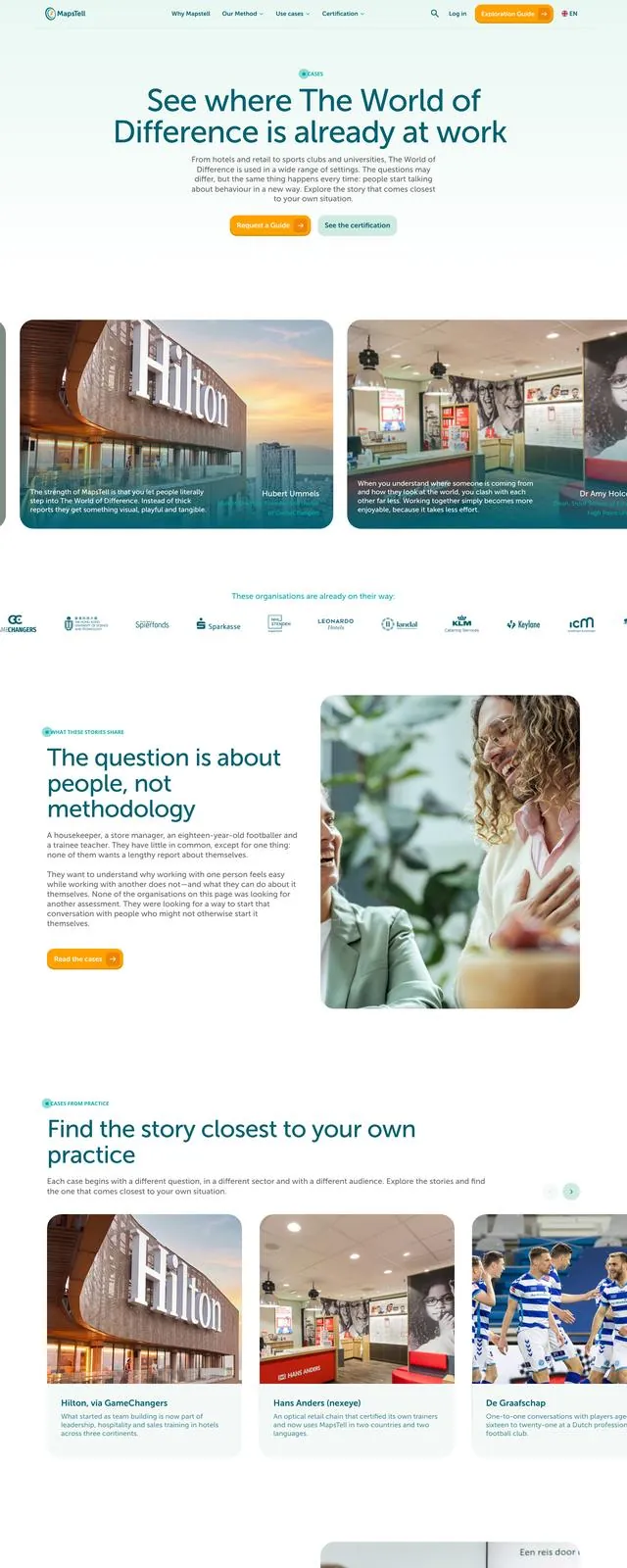
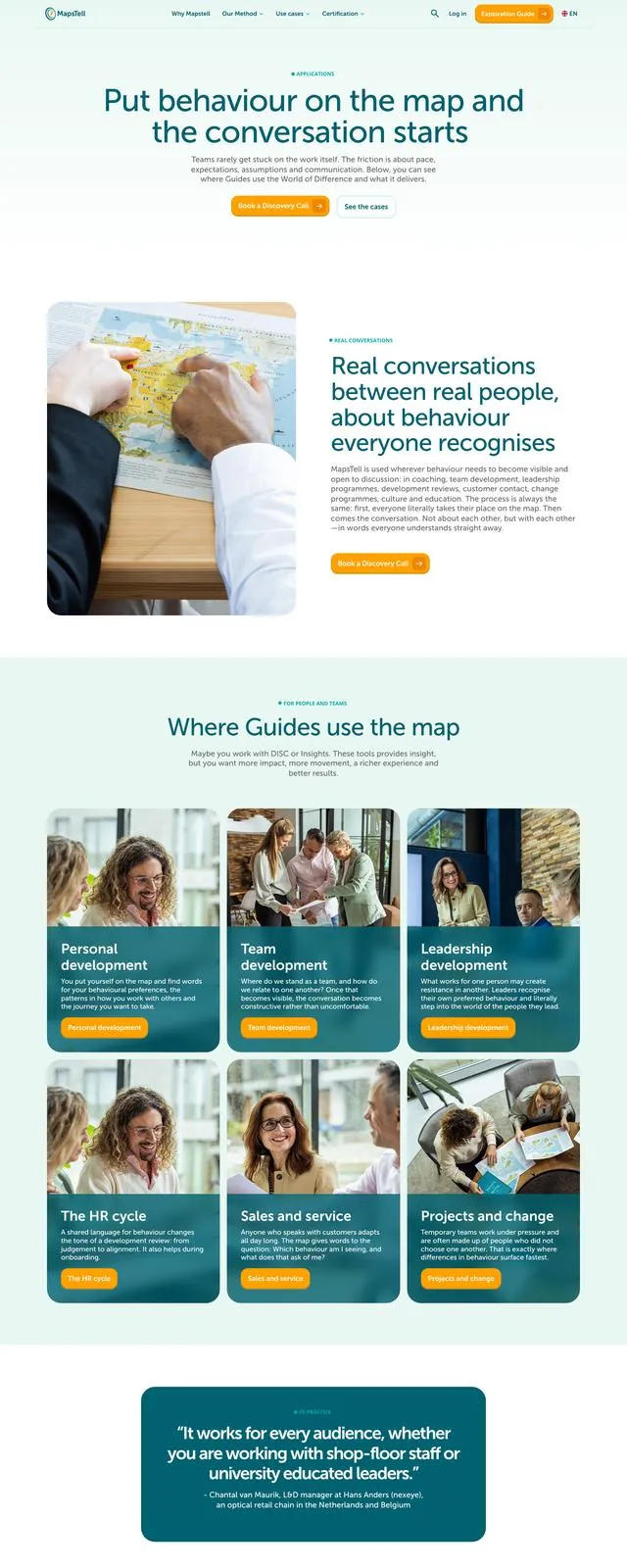
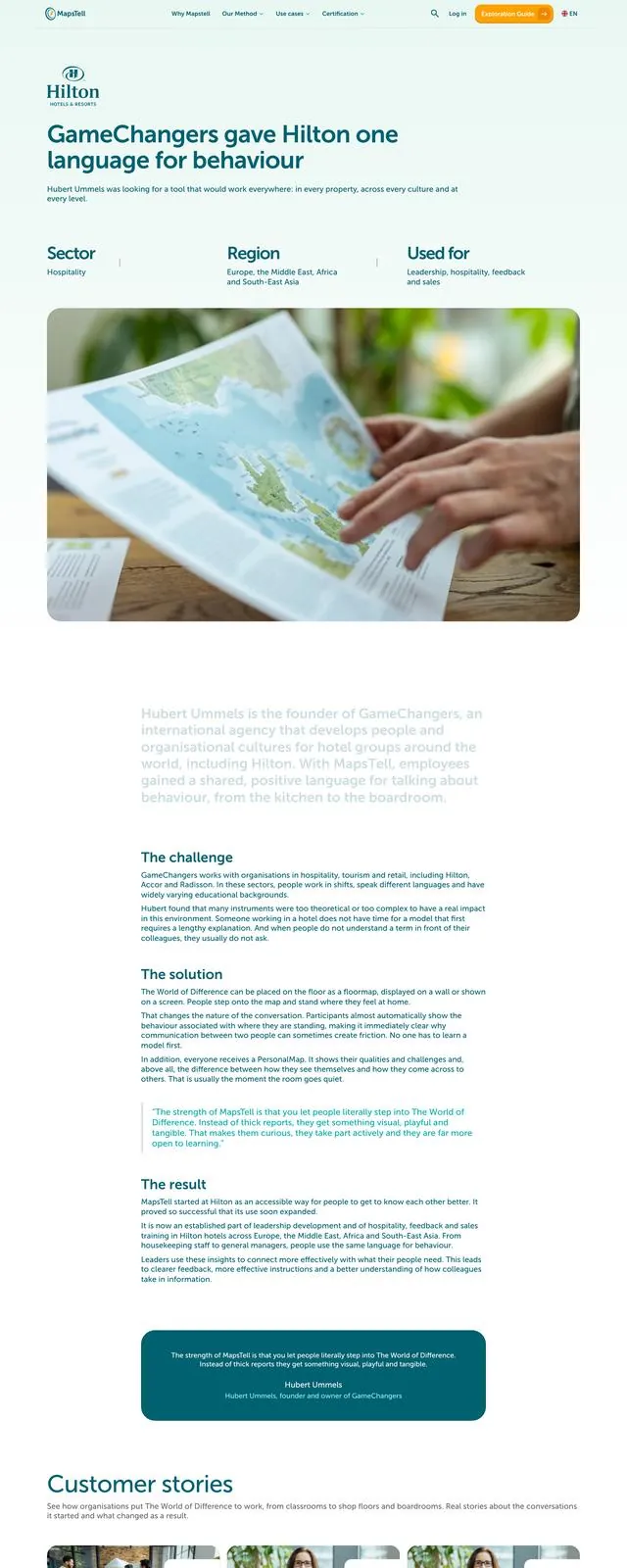
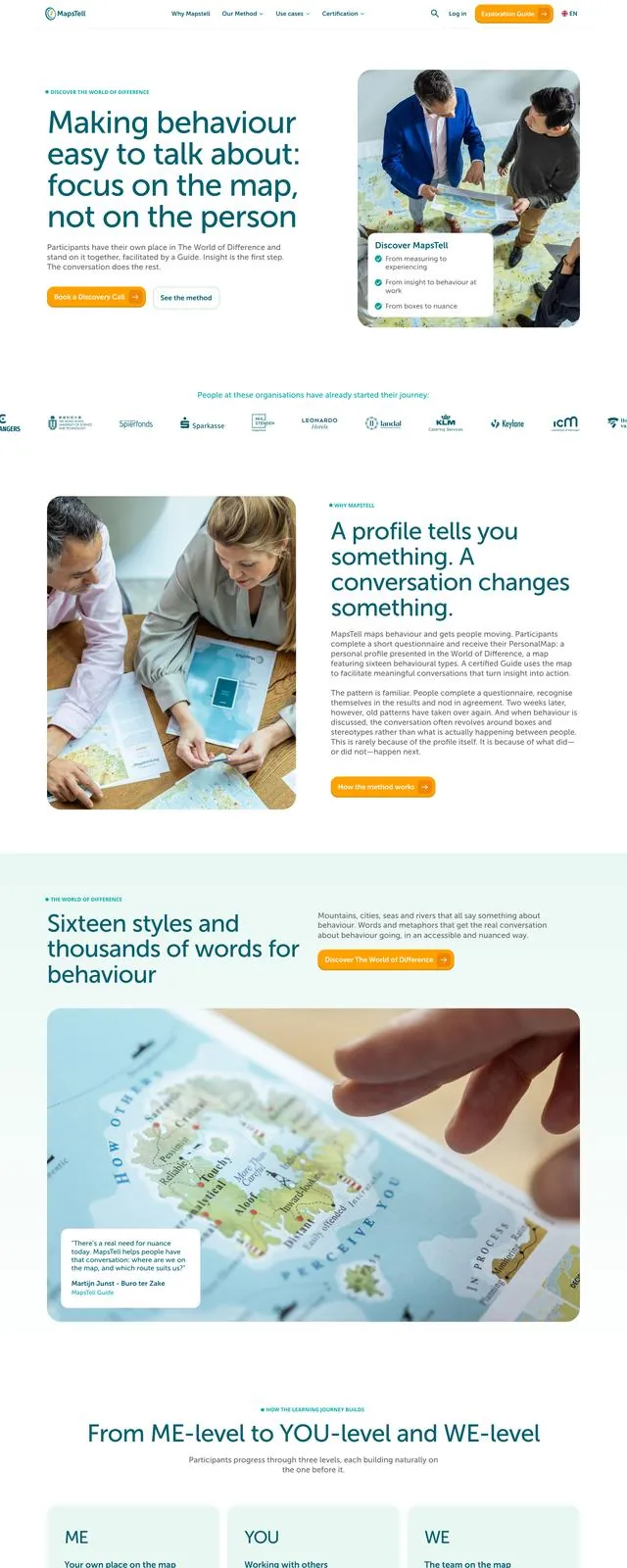
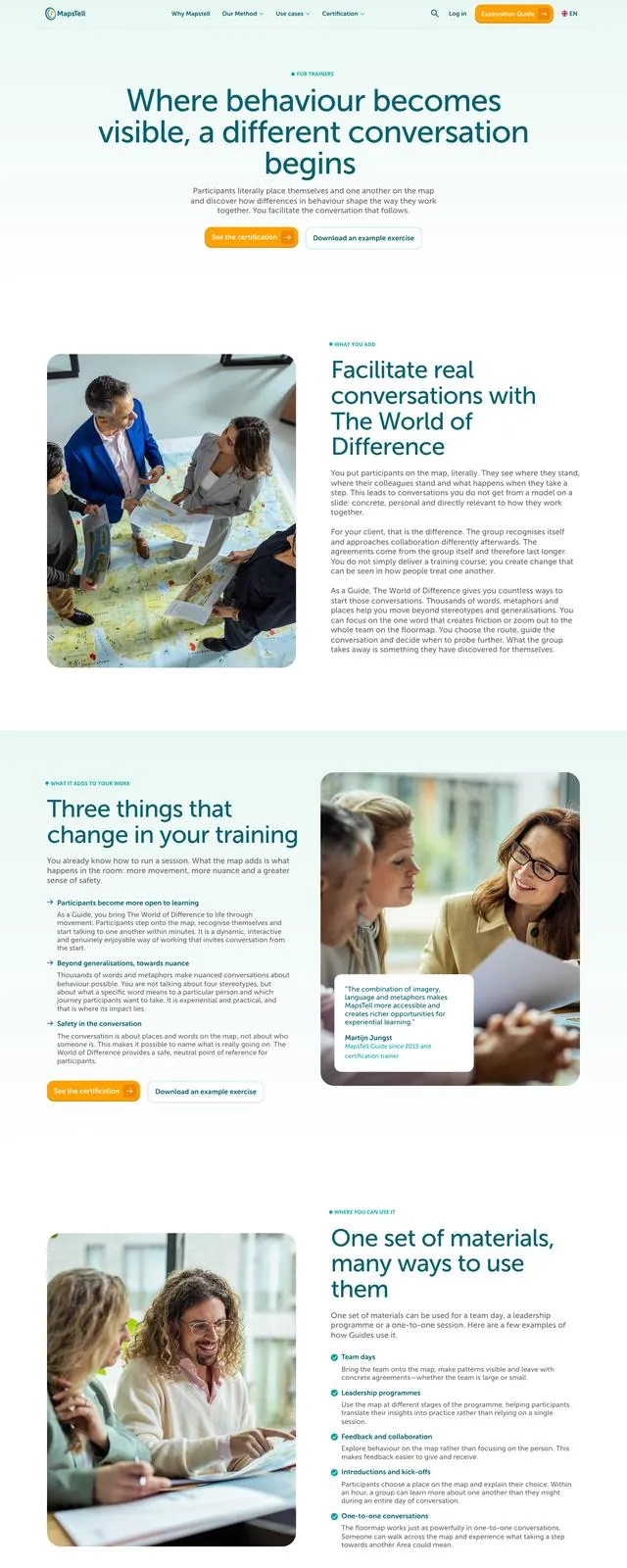
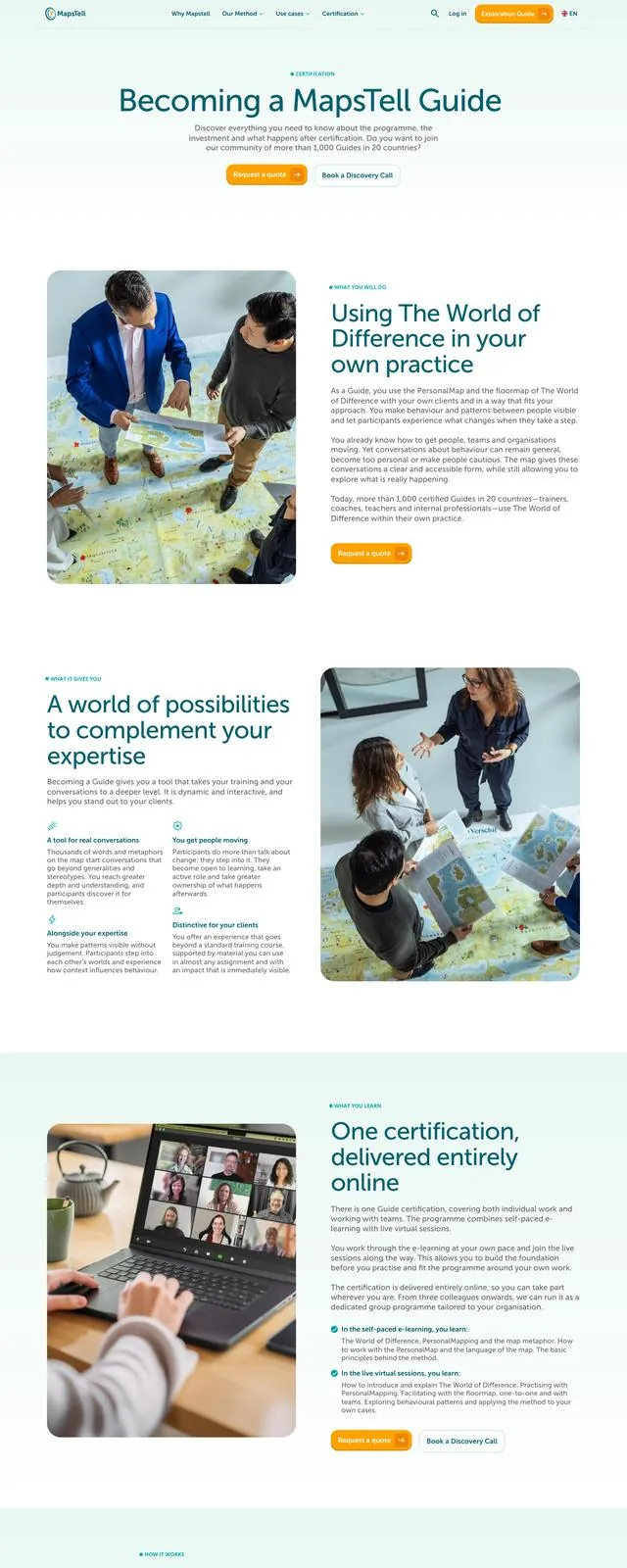
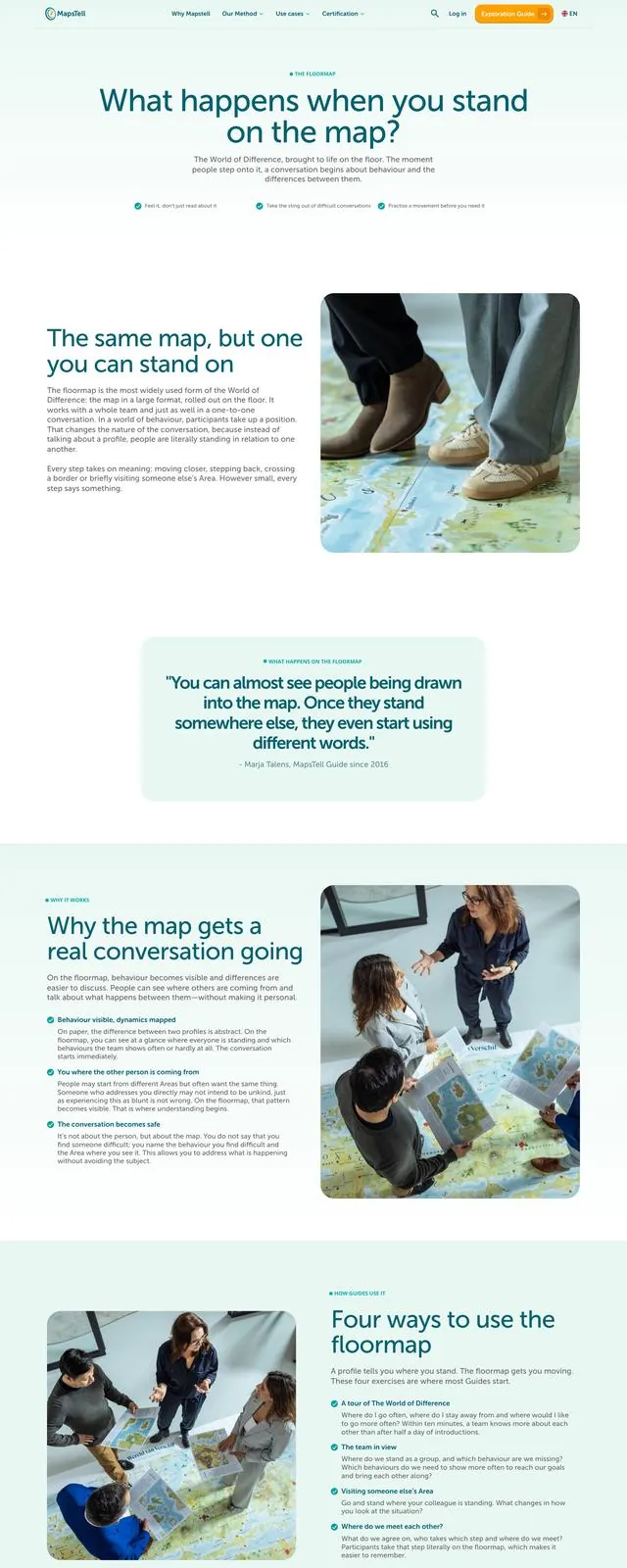
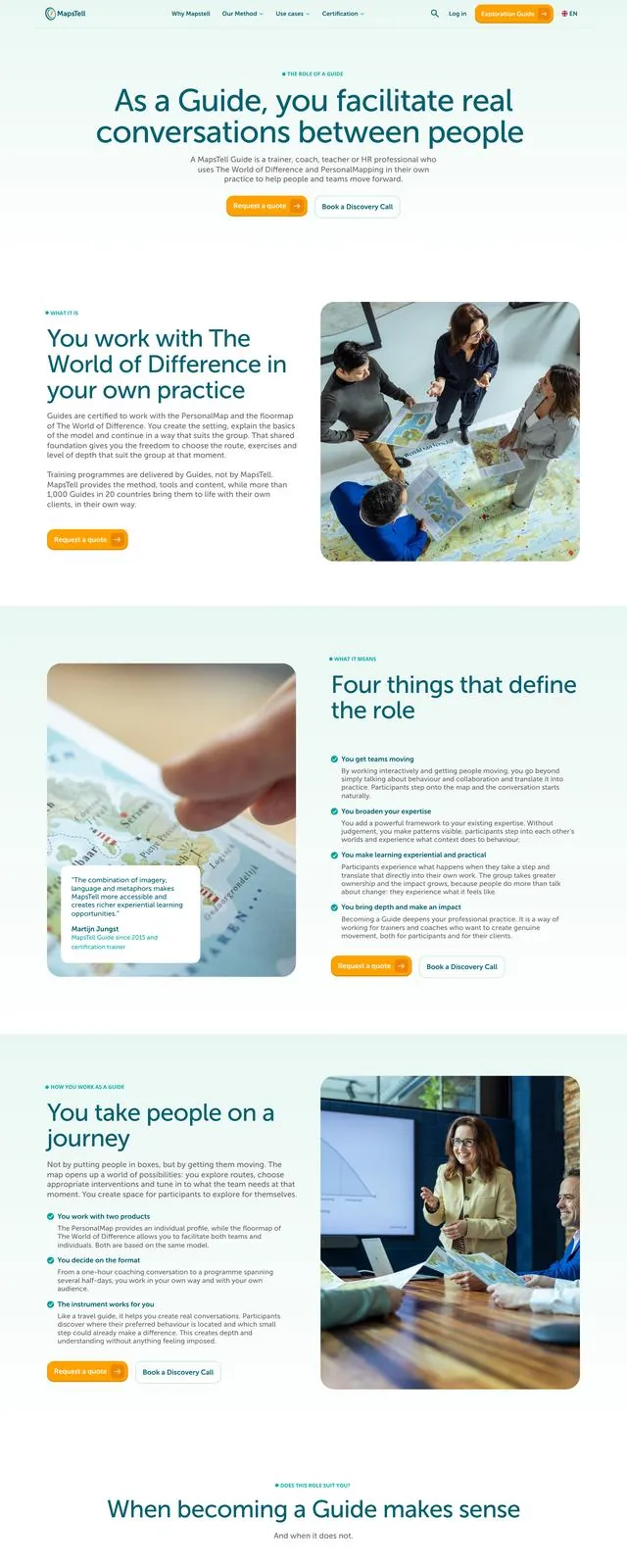
Every column holds real pages from mapstell.com. Different stories, the same library underneath.
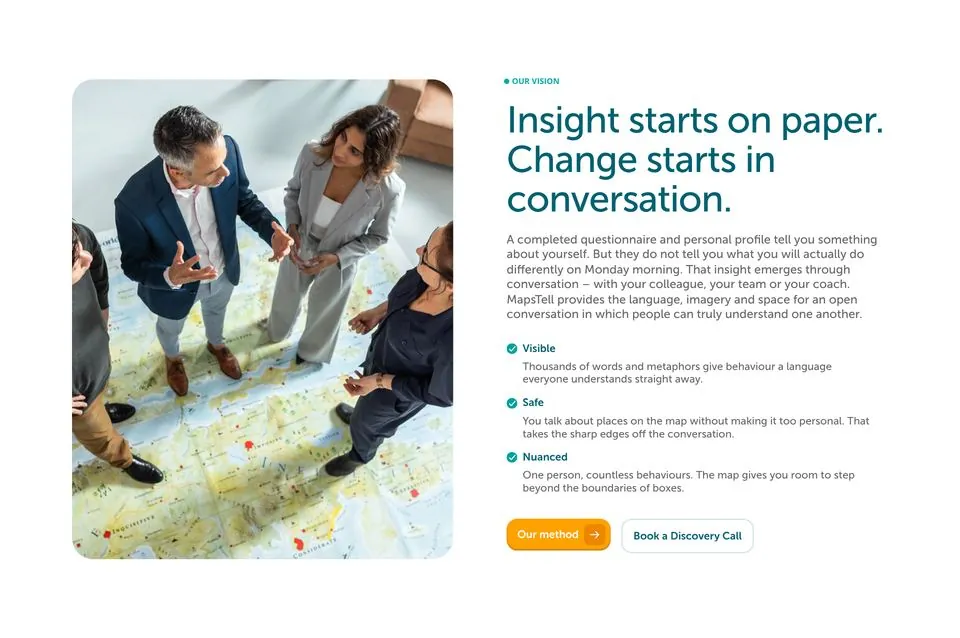
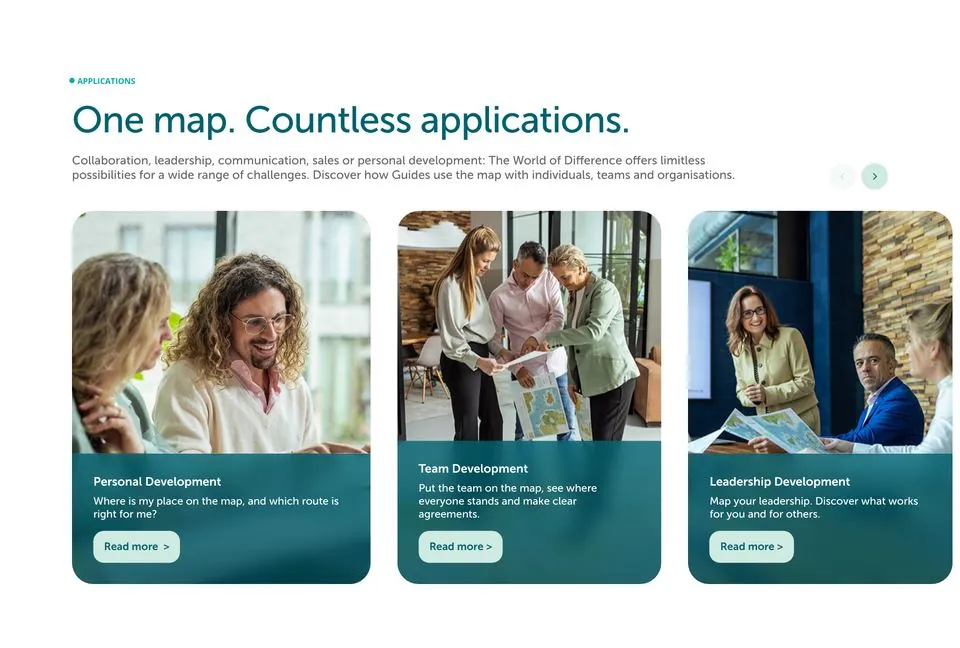
The method, the applications, the certification and the client stories are built from the same components as the homepage.
Nothing moves for show: each one helps a first-time visitor find their place. Every card sketches the idea; point at it and the recording from the live site takes over.
We map behaviour and get people talking, closer, curious, amazed, connected. One sentence, five promises.
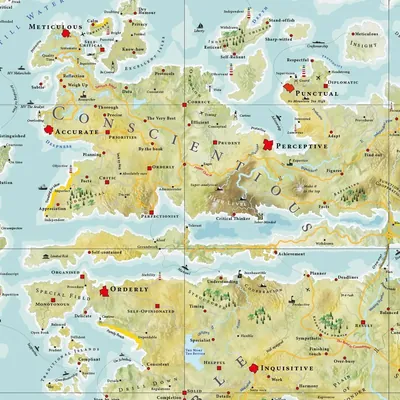
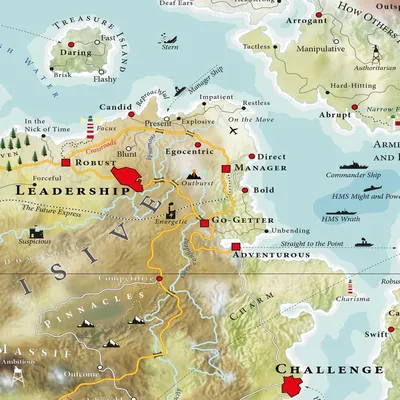
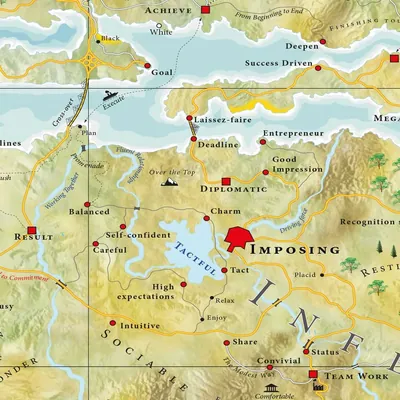
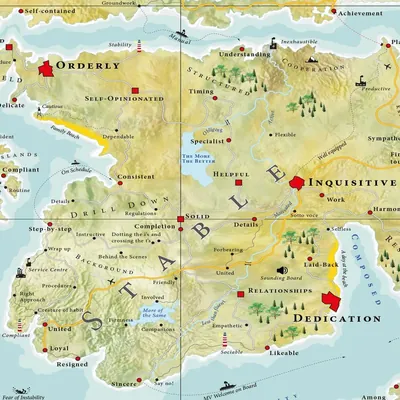
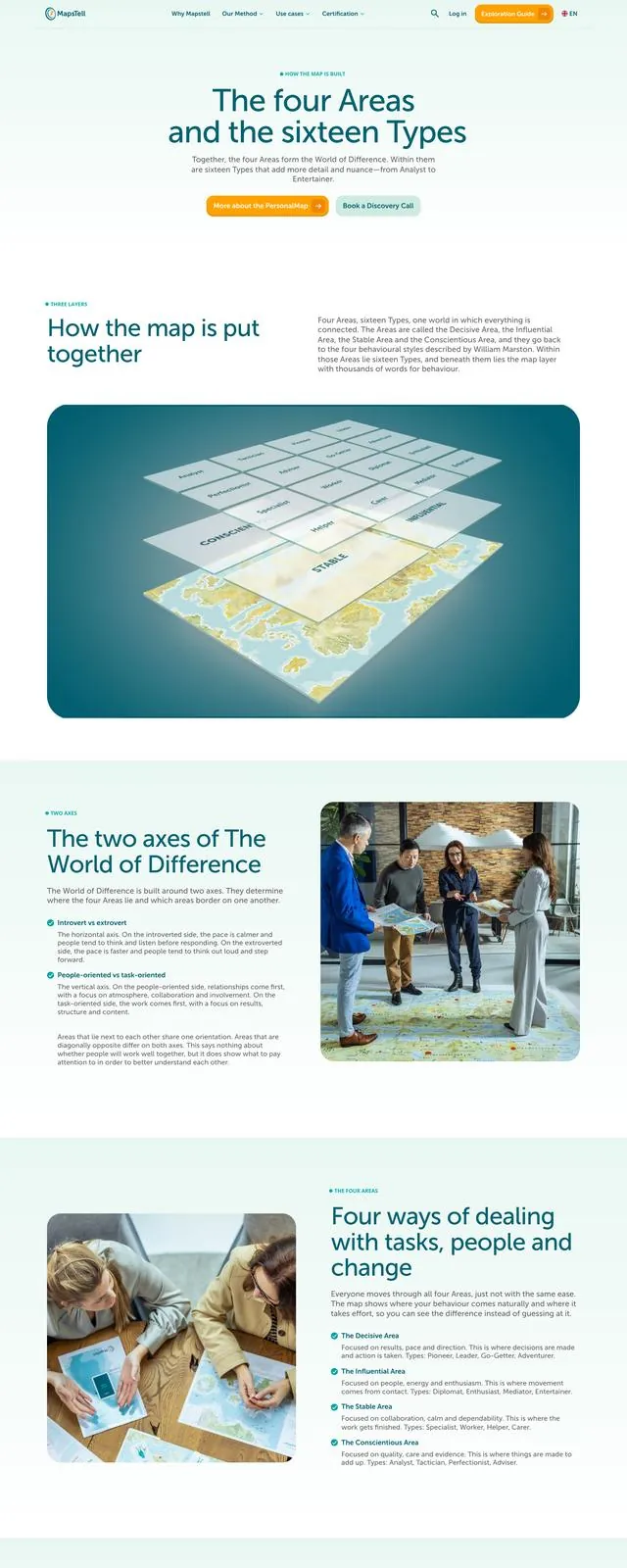
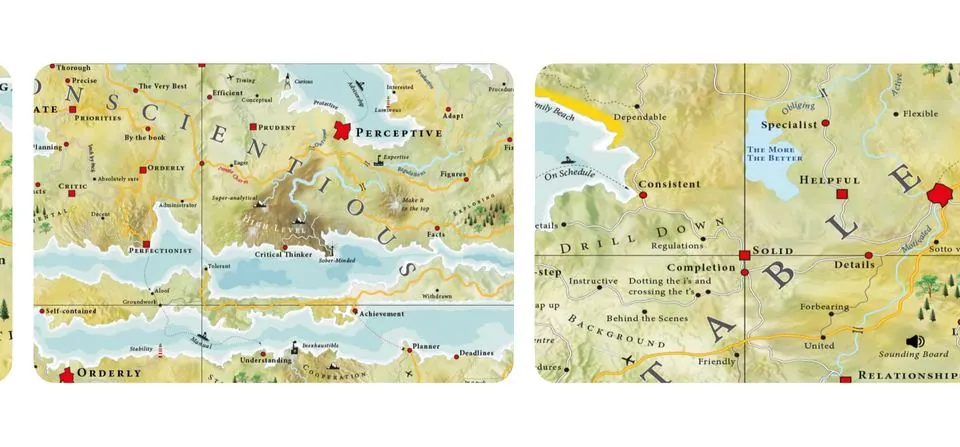
The map artwork drifts past under the hero and follows your drag.
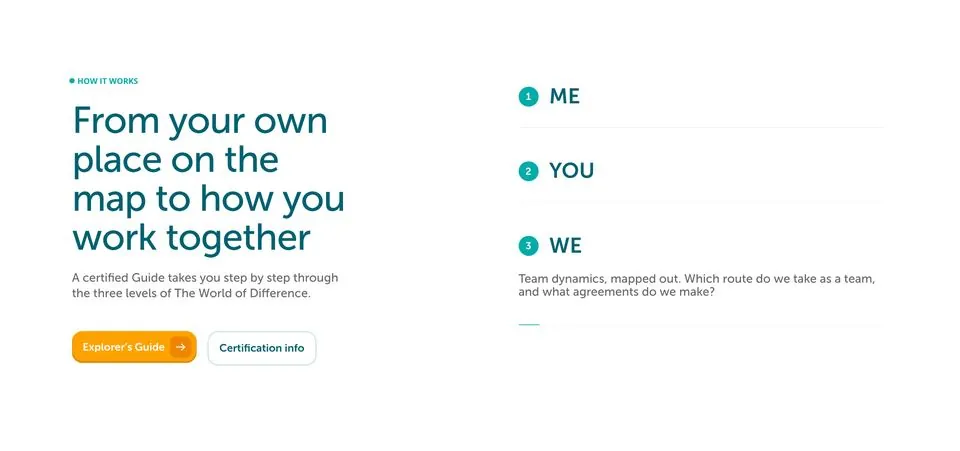
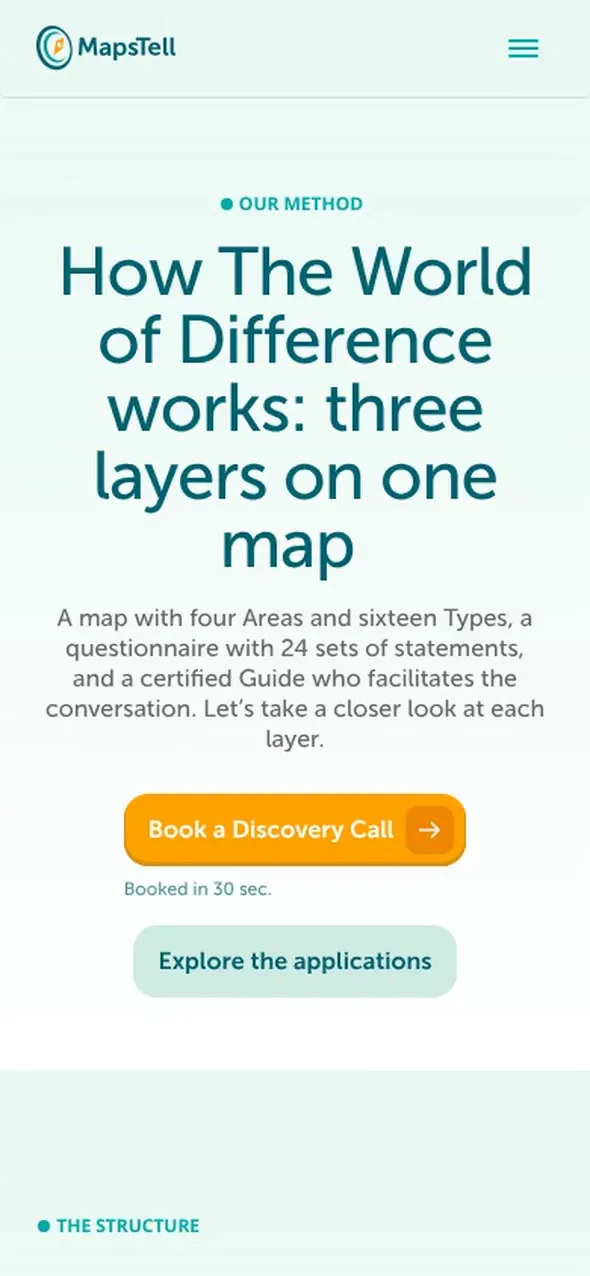
ME, YOU, WE. The three levels of the method open one after the other.
A click fades the page out and the next one in, and the new headline builds up line by line.
Questions fold open in place, written for people and for search.
Built by the team from ready-made field components.
Filters out spam and adds where the visitor came from.
Maps the fields and passes the submission on.
A new lead, ready for the team to follow up.
This demo stays on this page. Nothing you type is sent or stored.
The Exploration Guide request and the contact form use the same field components. Whatever form the team adds next follows the same route into the CRM.
Five jobs that used to need a developer. Four of them now start and end with the MapsTell team.
Add components to the page slot, fill in the properties and publish.
Move a component up, swap it for another or take it out. The design holds either way.
The field components are ready, and the CRM connection comes with them.

Stories and resources live in the CMS and appear wherever the topic fits.
When a story needs a block that does not exist yet, we design it, build it and add it to the library.